Italy of old streets: light, facade textures, and the depth of small historic districts
Facades That Embrace Their Age
Italy is one of the few places where the aging of buildings is seen as beauty.
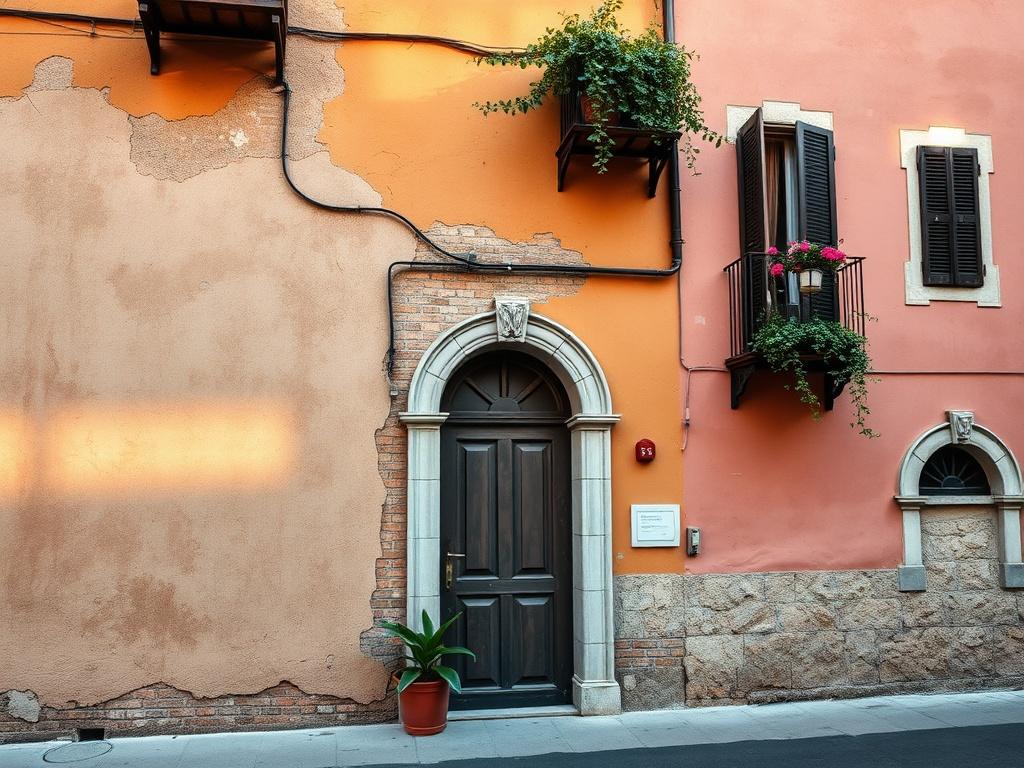
Looking at old houses, you’ll notice photos of old Italian facades with peeling plaster, exposed brick, traces of past structures, faint fresco remains, and dark streaks from rain.
These are not flaws – they are stories carved into the surface.
Shades That Make Italy Feel Warm
One reason Italy feels so warm is its natural color palette.
When observing the colors of old Italian building facades, you see soft ochres blending with sun-faded terracotta, dark brick accents, and gentle pink reflections appearing on the walls in the evening.
These tones were shaped not by artists but by sunlight and time.
Streets That Preserve Quietness
Old Italy is best experienced through slow walking.
Routes like the Italian streets with historic houses reveal an atmosphere shaped by narrow stone passages, arched walkways, overhanging balconies, and shadows tracing delicate patterns along the walls.
Here the past hasn’t disappeared – it simply lives quietly alongside the present.
Architectural Layers Preserved in Small Towns
To see the real Italy, step away from the busy centers and explore its old districts.
The ancient Italian quarters for walking show how homes naturally followed the terrain and evolved according to everyday needs.
There you can see the unusual architecture of small Italian towns – asymmetrical but harmonious, shaped by life rather than design.
The full original post is available on the Love Italy Club website.